Elephant Modern Cross Stitch Pattern Review for Brands
As an embroidery designer who spends most of my days digitizing logos and prepping files for commercial machines, I approach every new design with a critical eye. When I first encountered the Elephant Modern Cross Stitch Pattern, I wasn't just looking at a cute animal motif; I was evaluating its potential as a viable asset for small business merchandise. In the world of branded patches, custom apparel, and handmade product labels, the difference between a hobbyist sketch and a professional design asset often comes down to scalability, stitch definition, and color versatility.
This review breaks down how this specific pattern performs when moved from a digital PDF to real-world applications like tote bags, staff uniforms, and boutique packaging. Whether you run a local café, a florist shop, or an Etsy store selling curated goods, understanding the practical limitations and strengths of a design is crucial before you commit to production.
Visual Personality and First Impressions
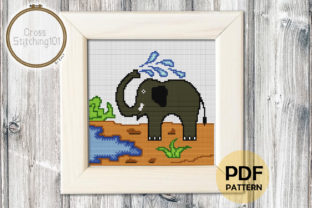
The immediate impression of the Elephant Modern Cross Stitch Pattern is one of approachable modernity. Unlike traditional, overly ornate elephant motifs that can feel dated or too rustic for contemporary branding, this design leans into clean lines and a simplified silhouette. With a grid size of 100 stitches wide by 92 stitches high, it offers enough detail to be recognizable without becoming a muddy mess when scaled down.
The use of 11 DMC thread colors suggests a palette that is likely balanced—enough to create depth and shading on the elephant's skin and features, but not so many that it becomes a nightmare to source or match for corporate branding. For a brand identity that wants to convey friendliness, stability, and a touch of whimsy, this graphic hits the mark. It feels premium yet handmade, which is a highly desirable aesthetic for businesses selling artisanal goods, organic products, or creative services.
Real-World Business Applications
So, where does this design actually work in a commercial setting? The dimensions listed for 14-count fabric are approximately 7.14 x 6.57 inches (18.18 x 16.73 cm). This is a substantial size, making it ideal for statement pieces rather than subtle accents.
- Tote Bag Design: This is perhaps the strongest use case. A canvas tote featuring this elephant as a central graphic creates an instant "hero" product for retail shops or event giveaways. The scale fits perfectly on a standard grocery-style tote.
- Apron Embroidery: For bakeries, florists, or pottery studios, stitching this onto the bib of a heavy-duty apron adds a charming, cohesive look to staff uniforms. It reinforces the "handmade" ethos of the business.
- Branded Patches: If you are creating an embroidered patch to sell separately or attach to denim jackets and hats, this design has the boldness required to stand out. However, you must ensure the digitization converts the cross-stitch blocks into solid satin or fill stitches appropriately for machine production.
- Product Packaging: While primarily a textile design, the graphic nature of the pattern makes it suitable for printable mockups on packaging tags or thank-you cards included in customer orders.
Critical Considerations for Production
While the aesthetic is strong, there are technical hurdles to clear before running this through a commercial embroidery machine or handing it off to a manufacturer. The original file is a cross-stitch pattern, meaning it is composed of individual X-stitches on a grid. To use this effectively on a cap or a textured polo shirt, you cannot simply treat it as a standard machine embroidery design without adjustments.
Stitch Density and Texture: True cross-stitch emulation in machine embroidery can result in very high stitch density. If you attempt to stitch every single "X" on a thick fabric like a twill cap or a fleece jacket, the design may become stiff, pucker, or lose its shape. For cap embroidery, I strongly recommend simplifying the fill or using a specialized technique that mimics the look without the bulk.
Size Limitations: At roughly 7 inches wide, this design is too large for a left-chest logo on a work shirt or a small sleeve detail. If you need it for those locations, you will need to scale it down significantly. Be warned: reducing a 100-stitch wide design to 3 inches may cause the 11 thread colors to bleed together, losing the definition of the elephant's eyes and trunk. Always test a smaller version on scrap fabric first.
Fabric and Stabilizer: Because cross-stitch relies on a visible grid, it works best on even-weave fabrics. When moving to arbitrary fabrics like jersey knits or coarse canvas, the underlying grid disappears. You must use the correct stabilizer to prevent the fabric from pulling the stitches out of alignment. For dark uniforms, ensure the thread colors have enough contrast; some of the lighter shades in the 11-color palette might get lost against navy or black backgrounds.
Impact on Brand Identity and Customer Trust
In the current market, consumers value authenticity. Using a design like the Elephant Modern Cross Stitch Pattern signals that your brand cares about craftsmanship. It differentiates your small business merch from the generic, mass-produced clipart found on cheap promotional items. When a customer sees a well-executed embroidered elephant on a tote bag or a high-quality patch, it elevates the perceived value of the entire finished product.
Consistency is key. If this elephant becomes part of your visual identity, ensure it is applied uniformly across all design assets. Whether it is on an employee uniform or a gift for a loyal client, the quality of the embroidery reflects directly on your professionalism. A sloppy application with poor tension or mismatched threads can undermine trust, whereas a crisp, vibrant execution builds brand recognition.
Designer Notes for Implementation
Before integrating this pattern into your product line, follow these practical steps to ensure success:
- Test in Monochrome: Before committing to the full 11-color palette, stitch a sample in black and white or a single brand color. This helps you verify if the shape holds up without the distraction of shading.
- Check Commercial Licensing: Since this is an instant download PDF, carefully review the license terms. Many cross-stitch patterns are for personal use only. You must confirm you have the rights to use the graphic for commercial embroidery projects or sold goods.
- Verify Hoop Size: Ensure your embroidery machine has a hoop size capable of handling the 7-inch width. If not, you may need to split the design or resize it, which impacts the stitch count and clarity.
- Create a Mockup: Generate a printable mockup or a digital composite showing the elephant on your specific product (e.g., a specific shade of apron or cap). Show this to stakeholders or clients for approval before stitching the final run.
- Compare Assets: Place this design beside your existing logo and other graphics. Does the style match? If your brand is ultra-minimalist, this detailed cross-stitch look might clash unless used intentionally as a contrasting element.
The Elephant Modern Cross Stitch Pattern is a versatile graphic with significant potential for brands looking to add a human touch to their merchandise. However, its transition from a paper pattern to a durable, wearable brand asset requires thoughtful adaptation. By respecting the constraints of stitch density, fabric texture, and sizing, you can transform this charming design into a powerful tool for customer engagement and brand storytelling.