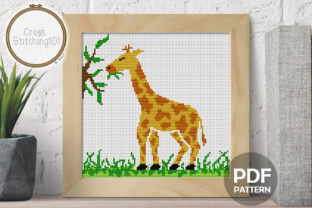
Giraffe Eating Modern Cross Stitch Review
As an embroidery designer who spends weekends behind a bustling craft fair booth, I am constantly evaluating which designs will stop a customer in their tracks. When I first pulled up the Giraffe Eating Modern Cross Stitch pattern, my immediate thought was about its potential as a high-margin handmade product. In a sea of generic florals and overused quotes, a giraffe motif offers something whimsical yet grounded. This review breaks down how this specific design performs when translated from a digital file to physical goods that sell.
First Impressions and Aesthetic Appeal
The title itself suggests a blend of nature and contemporary style. Upon reviewing the specs—100 stitches wide by 98 stitches high on 14 count fabric—the design feels compact but substantial. It is not a massive, overwhelming piece, nor is it a tiny, lost detail. This "Goldilocks" size makes it incredibly versatile for a craft fair product lineup. The aesthetic leans heavily into modern farmhouse and whimsical rustic vibes. It feels soft and approachable, likely appealing to buyers looking for unique home decor or playful accessories.
For an Etsy seller or boutique maker, visual appeal is everything. This design has strong silhouette potential. Even from a distance across a crowded aisle, the shape of a giraffe is recognizable. The fact that it uses only six DMC thread colors is a significant advantage. It means the color palette is curated and cohesive, reducing the risk of clashing threads that can make a finished product look amateurish. Whether you pair it with earthy tones for a rustic look or bright primaries for a nursery vibe, the design holds its own.
Ideal Applications for Market Sales
When setting up my table, I always categorize items by impulse buy potential versus statement pieces. The Giraffe Eating Modern Cross Stitch shines brightest on mid-sized textiles. Here is how I would deploy it:
- Tote Bags: This is arguably the best application. A natural canvas tote with this design centered on the front becomes an instant tote bag design winner. The 7-inch width fits perfectly within the standard printable area of most bags without requiring re-hooping nightmares.
- Tea Towels and Aprons: Kitchen linens are staples at craft fairs. As a tea towel embroidery or apron embroidery, the design adds a touch of personality to utilitarian items. The moderate stitch count ensures the towel remains absorbent and not too stiff.
- Pillow Covers: For home decor shoppers, a linen pillow cover featuring this graphic acts as a focal point. It elevates a simple cushion into a small shop product with perceived higher value.
- Patches and Pouches: If you stitch this on twill and cut it out, it becomes a fantastic embroidered patch. These are great add-on sales for customers who want the design but don't need a full-sized item.
While it could work on caps, one must be cautious. The curved surface of a baseball cap can distort designs, and while 100 stitches is manageable, ensuring the giraffe's neck doesn't look warped requires careful placement. Similarly, for very small pouches, ensure the design doesn't get lost in the seams.
Production Practicality and Batch Efficiency
Time is money at a craft fair. One of the strongest selling points of the Giraffe Eating Modern Cross Stitch is its production speed. With a width of only 100 stitches, this is a quick stitch-out. On a modern machine, this likely takes mere minutes. This efficiency allows for batch production; you can hoop multiple tea towel embroidery blanks or tote bags and run them in succession.
The design also photographs exceptionally well. For your online listings, the clear lines and limited color palette create high-contrast images that pop on mobile screens. Creating a printable mockup for your digital store or social media ads will be straightforward because the design boundaries are well-defined. It serves as excellent design assets for building a consistent brand image across your marketing channels.
Critical Considerations for Execution
Despite its strengths, there are technical aspects every commercial embroidery professional must address before selling. First, consider the stitch density. While the pattern details say "Any fabric you like," reality dictates otherwise. Dense stitching on thick terrycloth towels can cause puckering. Always test on scrap fabric that matches your final product material.
Thread contrast is another vital factor. With only six colors, each shade must distinctively separate from the others and the background fabric. If you choose a dark navy tote bag, ensure the giraffe's lighter tones are bright enough to stand out. Conversely, on white fabric, ensure the outline stitches are dark enough to define the shape.
Stabilizer choice is non-negotiable. For stretchy fabrics like tote bags or jersey knits, a cut-away stabilizer is often safer than tear-away to prevent distortion over time. For woven linens used in pillow covers, a high-quality tear-away might suffice, but always check the back of your hoop. Messy backsides can ruin the perception of quality for a discerning buyer.
Maximizing Value and Customer Engagement
In the context of a busy market, the Giraffe Eating Modern Cross Stitch acts as a conversation starter. It is quirky enough to make people smile but classic enough to fit into various interior design styles. This duality broadens your customer base. You aren't just selling to giraffe lovers; you are selling to anyone who appreciates modern, handcrafted aesthetics.
To maximize the perceived value, presentation is key. Display the design on a variety of textures—a rough linen, a smooth cotton, a sturdy canvas. This shows the versatility of the embroidery file and helps customers visualize it in their own homes. If you are selling the digital file itself as part of your Cross Stitch Patterns or Graphics inventory, ensure your listing clearly states the dimensions (7.14 x 7 inches) so buyers know exactly what hoop size they need.
Finally, a note on licensing. Before turning these into commercial goods, always confirm the license terms attached to the download. Some designers allow unlimited finished goods sales, while others have restrictions. Assuming the license permits commercial embroidery, this design is a low-risk, high-reward addition to your catalog.
In conclusion, the Giraffe Eating Modern Cross Stitch is a robust choice for the practical maker. It balances speed of production with high visual impact. By paying attention to fabric texture, thread contrast, and stabilizer selection, you can transform this simple pattern into a standout star of your next craft fair booth.