Review: Cozy Books and Coffee Embroidery Design
As a designer who spends more time staring at stitch maps than actual books, I know that the difference between a "cute idea" and a sellable product often comes down to the quality of the digital embroidery file. When I first pulled up the Cozy Books and Coffee Embroidery Design, my immediate reaction wasn't just about the theme—though the reading niche is undeniably hot right now—but about the technical execution. Does this design hold up under the needle, or is it just a pretty picture that will puckers and break threads? After mentally walking through a few real-world scenarios, here is my practical take on how this asset performs for serious makers.
The Visual Mood and Layout Assessment
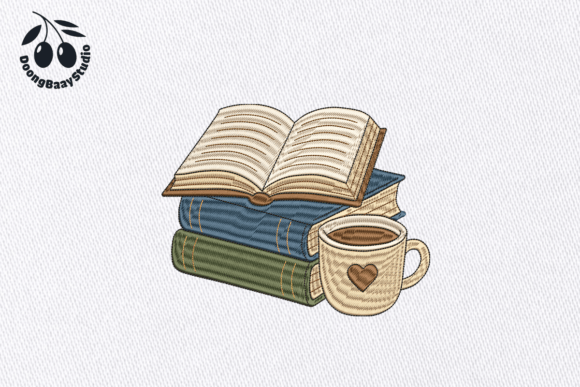
The first thing that strikes me about this design is its narrative clarity. It isn't just a random collection of objects; it tells a story of comfort. The composition features a stack of books, an open volume, and a steaming mug, arranged in a way that feels organic rather than rigid. For those of us creating handmade products, mood is everything. This design screams "hygge," making it an instant fit for fall collections, teacher appreciation gifts, or library fundraising merchandise.
From a layout perspective, the balance seems solid. The verticality of the book stack grounds the design, while the open book and mug add horizontal interest. This creates a roughly square or slightly rectangular footprint, which is versatile for various hoop sizes. However, as an experienced reviewer, I always look for potential trouble spots in the line work. The steam rising from the coffee mug and the pages of the open book are areas where stitch density needs to be managed carefully. If the digitizer relied too heavily on tiny running stitch details for the steam, it might get lost on textured fabrics. Conversely, if the book spines are filled with heavy fill stitch without proper underlay, they could become stiff patches on soft garments.
Real-World Application Scenarios
Let's move beyond the screen and imagine this design on actual goods. I recently worked on a project for a local boutique that needed custom apparel for their autumn launch. The Cozy Books and Coffee Embroidery Design would have been perfect for their oversized crewneck sweatshirts. On a medium-weight cotton blend, the design's likely mix of satin stitch borders and fill areas would pop beautifully. The warmth of the theme aligns perfectly with the tactile nature of a sweatshirt.
Another strong contender for this design is the tote bag design market. Canvas bags are a staple for Etsy sellers and librarians alike. Because canvas has a distinct weave, this design would need to be tested to ensure the stitches don't sink into the fabric texture. If the digitization is sharp, the contrast between the thread colors and the natural canvas could create a stunning, rustic aesthetic. It also works well as an embroidered patch. If you plan to stitch this out on twill and then apply it as a patch, the defined edges of the books and mug should hold up well, provided the merrow border (if added) doesn't overwhelm the internal details.
For the School category, think about teacher gifts or reading nook decor. A pillow cover featuring this motif would be a hit in a classroom library. However, one must consider the end-user. Kids might be rough on pillowcases, so the durability of the stitching becomes paramount. This is where checking the stitch density is crucial; too dense, and the fabric tears; too light, and the design looks amateurish after a few washes.
Technical Considerations and Fabric Challenges
While the theme is universal, the application requires discretion. Not every fabric is a friend to this specific style of illustration. If you are attempting baby embroidery on a onesie, you must be cautious. The stack of books implies a certain level of detail that might be too heavy for thin, stretchy knits. In such cases, using a high-quality cut-away stabilizer is non-negotiable to prevent distortion. Without it, the weight of the thread could cause the garment to sag around the design area.
Dark fabrics present another challenge. The description mentions a "warm coffee mug," which suggests earth tones—browns, creams, perhaps a muted red or green for the book spines. On a black hoodie, these colors need sufficient contrast. If the thread colors selected are too dark, the definition between the mug and the background will vanish. I always recommend running a black-and-white mockup first to check value contrast before committing to the hoop.
Curved surfaces, like caps, are tricky with pictorial designs. The horizontal spread of the open book and mug might distort if placed too low on the front panel of a cap. This design is likely better suited for the side panel of a hat or kept strictly to flat surfaces like aprons and tea towels. Speaking of kitchen items, if used on a tea towel, remember that frequent washing requires robust locking stitches and possibly a water-soluble topper to keep the fill stitch areas clean from lint and oil.
Business Value and Brand Consistency
For craft business owners, the visual appeal of a design directly translates to perceived value. A crisp, well-digitized Cozy Books and Coffee Embroidery Design signals professionalism. It tells the customer that you care about quality, not just speed. This builds trust, which is the currency of the handmade economy. Whether you are selling finished products or offering personalization services, this design offers a high "giftability" factor. It resonates emotionally with book lovers, making it an easy sell during holiday seasons or for holiday embroidery promotions.
Furthermore, consistency is key for brand recognition. If your shop specializes in cozy, literary-themed goods, this asset fits seamlessly into your catalog. It can be adapted for various printable mockups to showcase on your website before you even stitch a single thread, helping you gauge customer interest with minimal upfront cost.
Designer Notes for Successful Execution
Before you load this machine embroidery design onto your machine, here is my checklist for ensuring a flawless result:
- Test on Scrap First: Never skip this step. Stitch the design on the exact same fabric and stabilizer combination you plan to use for the final product.
- Check Thread Contrast: Ensure the coffee and book colors stand out against your chosen fabric background.
- Inspect Small Details: Zoom in on the digital preview. Are the pages of the open book distinguishable? Is the steam visible?
- Verify Licensing: Since this falls under the School and general craft categories, confirm if the license allows for commercial embroidery sales or if it is for personal use only.
- Stabilizer Selection: Match the stabilizer to the fabric weight. Heavier fabrics might need less support, while stretchy knits demand robust stabilization.
- Hoop Size Confirmation: Ensure the design fits comfortably within your available hoop size without needing to re-hoop mid-design, which can cause alignment issues.
In conclusion, the Cozy Books and Coffee Embroidery Design holds significant promise for creators looking to tap into the literary lifestyle market. Its strength lies in its relatable theme and balanced composition. However, its success in your embroidery project ultimately depends on your attention to technical details like fabric choice, stabilizer use, and thread selection. Treat it with the respect a good story deserves, and it will serve as a cornerstone for some beautiful, sellable creations.